

 Home Grown: Angela & Nelson’s Story of SDA
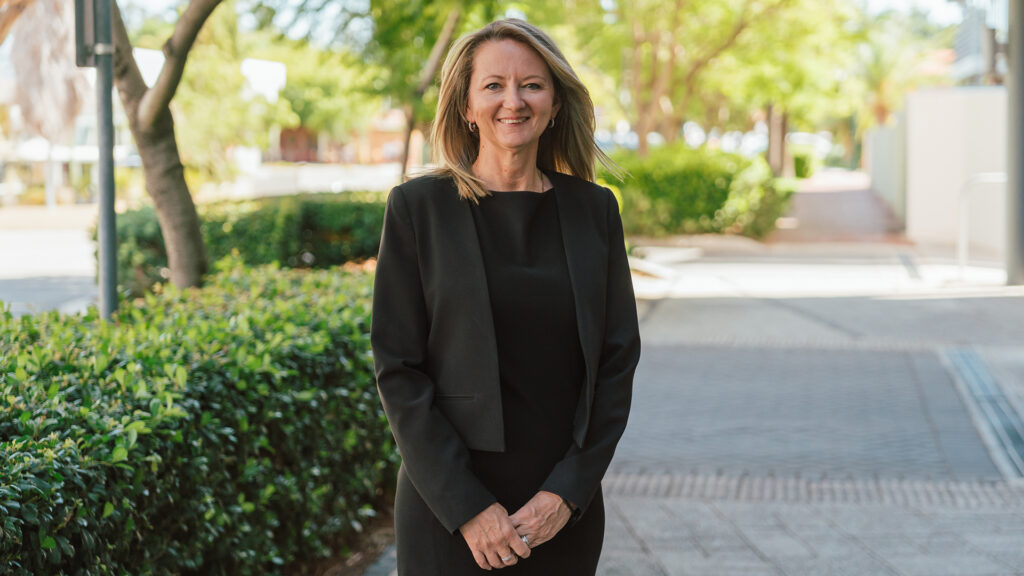
Angela’s search for a specialist disability home for her adult son, Nelson, began almost four years ago. The journey of navigating the housing space has been long, arduous and fraught with obstacles. With a fierce determination, Angela has fought to secure her son’s future: by finding an accessible home in Perth where he feels safe and can live comfortably in the long-term.
Nelson’s First Move
Nelson, who is 23 years old, was born with Angelman syndrome – a rare genetic condition that affects the nervous system and causes severe physical and learning disabilities. Nelson’s symptoms include intellectual disability, lack of speech and some physical challenges.
Up until the age of 19, Nelson, who is a twin, lived at home with Angela and the rest of his family. His mother was his primary carer, providing 24-hour support.
As Nelson was becoming older, his family wanted to put long-term plans in place for Nelson: “I wanted to make sure Nelson would be okay if something happened to me – that he had a home and people caring for him,” Angela says.
So, Angela began to look at housing options for her son. It was 2022 – several years after the NDIS had been rolled out across WA. As Nelson was eligible for Supported Independent Living (SIL), Angela worked with the NDIA to find a SIL home in Perth. This took a few months but eventually a home with 24-hour care supports in place was found for Nelson. For the first time, Nelson moved out of his family home.
One evening, Angela stopped by the home to drop something off. She knocked on the door, and no one answered. As the key box was empty, she called the SIL provider to request the key but there was no response.
Angela knew something was wrong. She called the police immediately and they arrived within minutes. Nelson had been left alone in the house.
“I got Nelson out of the SIL home immediately and reported the incident to the NDIA and the NDIS Quality and Safeguards Commission,” Angela says.
Applying for SDA & temporary accommodation
After leaving the SIL home in early 2023, Nelson was placed into temporary accommodation. During this time, Angela applied for SDA. While they waited for SDA funding approval, Nelson received short term accommodation funding to cover his accommodation costs.
Over the next 18 or so months, Nelson was moved four times.
For the first six months, Nelson lived in an SDA home (covered by short-term accommodation funding) until an incident occurred which placed Nelson at risk. Angela removed Nelson from the home and placed him into a SIL home.
“The SIL provider agreed Nelson could bring his own supports and transition to their supports once safe and comfortable for Nelson to do so,” Angela says, explaining that it normally takes Nelson at least three months to adjust to new people delivering supports.
“But after six nights, the SIL provider told me that unless they are providing all of Nelson’s supports, he will need to move out within 24 hours.”
Angela removed Nelson immediately from the home and lodged a complaint against the SIL provider to the NDIS Quality and Safeguards Commission.
Nelson now needed immediate accommodation.
Accommodation was arranged at an accessible serviced apartment: he remained in the first one for two months and moved to another one (offering a longer lease) for 12 months until he was hospitalized and was unable to return; the accommodation was no longer suitable.
Moving into SDA – the first time
Nelson remained in hospital for a month, at which time his SDA funding was approved. After working with the NDIA and SDA providers, Angela finally found a home for her son.
Nelson was released from hospital and moved into the property in late 2024. Nelson who is unable to share a home, lived on his own.
Nelson lived next door to an SDA resident who also lived alone.
After a few months, Angela discovered that this was not an ideal living situation for her son. “The neighbour would have lots of parties, play loud music, there was drug use and the police were constantly at the house,” Angela says.
Angela was worried about the ongoing problems this situation could cause including the possibility of Nelson’s support staff quitting: “If staff feel threatened or unsafe with what is happening next door especially with the police turning up at all hours, they may not want to go to work.”
Angela decided her son had to move to a new home.
This meant another upheaval for Nelson.
Another move – a new SDA with Nesti
In 2025, Angela’s Support Coordinator introduced her to Nesti Housing, an SDA housing provider and member of the SDA Alliance.
Right from the start, Angela felt reassured by Nesti’s efficient and methodical approach. “Nesti staff arranged several meetings with me and Nelson. They asked for documents such as Nelson’s behavioural support plans and allied health reports so they could obtain a detailed understanding of his needs. Nesti’s staff asked a lot of questions and were careful to ensure Nelson was a suitable match for the property and that he had appropriate care supports in place.”
A few weeks later, Nesti’s Housing Engagement team offered Nelson a two-bedroom fully accessible home. Despite it being a two-bedroom home, the owner of the property was open to renting it to Nelson as a single occupant as they understood Nelson is unable to live in a share home.
The location was ideal: a twenty-minute drive from the city. Location was an important consideration – mainly as it plays a considerable role in ensuring continuity of services. Angela wanted to ensure Nelson’s support team did not have an unreasonable commute to get to work. Nelson is supported by a team of 5-6 individuals per day (including an active overnight shift).
For Nelson, adjusting to new support workers can be very stressful and challenging.
“Nelson is nonverbal and his condition is complex – this can make if challenging for people to understand how to best support him,” Angela explains. “We need to teach his carers how to support him in the way he likes, and it takes time to do that.”
As the SDA property was already built, Angela did not have the opportunity to participate in the design and construction process of the home. However, Nesti offered the opportunity for Angela to inspect the property and request modifications that were required for Nelson to ensure his safety and comfort prior to him moving into his new home.
“Nesti sorted out the modifications we needed promptly,” Angela says.
Angela explains that Nelson’s home not only offers long term housing stability but exposes him to far less risk as his living environment is set up to meet his needs.
“Nelson’s bedroom is large enough to accommodate his specialist bed, and the bathroom is safe for him to use. The rooms are sufficiently sized so multiple staff can deliver services. The home has a double garage which fits his van which means Nelson is protected from the elements when being transferred from the car to the home – this is important as Nelson has a history of respiratory dysfunction which can make breathing difficult,” Angela explains.
Angela smiles as she explains that one of Nelson’s greatest joys is gazing out the widow and watching the world outside. His home has ample windows, designed at the right height, so he can spend time looking out the window each day.
“After all the obstacles, I know this will be his forever home,” Angela says confidently.
Quality services – what they look like and why they matter
When it comes to quality services for her son, Angela looks for great staff.
Nelson now has a professional and skilled team delivering a range of care supports, however Angela says this was not always the case: “The current team is fabulous – but to reach this point you need to discern what is good and what is not so good. Nelson has an intellectual disability and is non-verbal so it can be really challenging for staff to work out what he needs and wants. I want care staff that are engaged and interested, rather than those who just rock up for their shift and don’t care.”
Staff who are appropriately trained and capable of responding to incidences which may occur on any given day is critical for Nelson’s safety.
Anegla also talks about the importance of staff having a deep understanding of the NDIS system – as this can have an impact on whether her son receives an NDIS Plan that meets his needs: “As the NDIA need to understand exactly what Nelson’s support needs are, I need to make sure his support team document everything accurately otherwise Nelson may not receive what he needs from his NDIS Plan. I cannot express how important it is to stay on top of everything to make sure everything works.”
Angela, who is Nelson’s advocate, talks about the skills required to manoeuvre the complexity of the NDIS including plan reviews: “Nelson’s annual plan review is never a straightforward process: you need to be able to call things out that aren’t right and not settle for second best.”
For Angela, communication is also a key determinate of quality services: “There will always be issues so the commitment of a provider to discuss and address issues is critical. Nesti is a good example as the communication between me and Nesti staff is clear, transparent and frequent.”
Comprehensive service agreements which are fair and transparent are also an important aspect of delivering quality services, Angela explains: “Service agreements outline expectations and ensure accountability. When I have experienced frustrations in the past with service providers not doing what they should be doing, the service agreement was useful to hold them to account.”
For Angela, SDA has improved Nelson’s quality of life – something he would not have experienced in any other kind of accommodation.
“Nelson is a lovely, loving young man,” Angela says smiling. “And while the system is not perfect, I am grateful to be living in a country where the NDIS exists and where my son is supported.”
“Nesti is a good example as the communication between me and Nesti staff is clear, transparent and frequent.”
Story written by Toni Palombi and originally published by SDA Alliance.